
by Daniel A. Rosen |
April 15, 2023
For six months, I’ve been looking over my shoulder. Staying home, keeping my head down and my counsel close. The boat that was my new life had been taking on water, and I’ve been trying to stop it from sinking. Everything I’d worked for my first year out of prison was suddenly in jeopardy.
For almost a year, I had patiently rebuilt my life after incarceration. I’d worked steadily, bartending when professional jobs weren’t forthcoming. I’d spent three months in a halfway house before finding subsidized housing through a city program and getting my own studio apartment. I’d rebuilt relationships with family and friends, and worked to forge new, more authentic connections with people in my life. I attended a treatment program and engaged the services of a private therapist. I volunteered with community organizations, ate right, worked out, and was even dating.
But in November, six months ago and one day shy of celebrating a year out of prison, my probation officer called me in and handed me a violation. Over my objection, I’d been discharged from the court-mandated treatment program I’d been assigned to – explicitly, they said, to “send a message that I needed to take it more seriously.” I’d made a few poor decisions in that first year (though I hadn’t engaged in any criminal conduct) and hadn’t been fully honest about them. I failed my first quarterly polygraph, and despite passing the next one, they felt the candor I’d demonstrated wasn’t timely or sufficient. I don’t want to deny any responsibility for that outcome, though I disagreed with their remedy. The treatment provider well-understood that discharging me from the program would earn me a violation, and that seemed to be their intent.
I knew that I still needed to be in a treatment program, so I enrolled myself in another the very next day, that I’ve paid for out of my own pocket ever since. I also knew immediately what this would mean: facing a judge in both DC and Virginia for probation revocation hearings. My convictions in 2015 had resulted in probation in both jurisdictions, and my discharge from the treatment program was contrary to both sets of release conditions.
There wasn’t much I could do at that point besides attend the new program, and try to stay on the right path. In the District, a hearing was scheduled, and I was assigned a court-appointed attorney. Steven turned out to be a patient and skilled advocate, taking time to fully understand the issue and preparing our defense. But this kind of probation revocation hearing is called a “show-cause” for a reason: the burden is on you as a defendant to show the court cause that your probation shouldn’t be revoked, the presumption being that it should be.
At the December hearing, Steven gave the court every reason not to return me to jail, and the judge in the case seemed disinterested in doing so. He also wasn’t ready to dismiss the matter, so he continued it for 90 days, and encouraged me to remain in the new treatment program and make good decisions in the meanwhile. Fair enough. I spent the holidays quietly, laying low and by myself. I also felt confident enough to take a major step that felt right: purchasing a home in the part of town I love and securing my living situation. Financially, it made sense, and I was lucky enough to have family support to make it a reality.
In January, I passed another polygraph, and waited. I moved into my new condo and started making a home. But I knew Virginia would drop the second shoe eventually. At the behest of the new treatment program, I started taking anxiety medication. I didn’t love it, but I trusted them, and had to admit to myself that managing my behavior hadn’t been entirely successful without it. I’d been examining the tools I had put in place to ensure that I wouldn’t reoffend, and I found them lacking. After all, my best thinking had led me to a probation violation. So I put some new pieces in place. I started attending twelve-step meetings and found a sponsor, and joined a faith-based support group. I took the pills. And stopped believing that I was in control of what’s truly addictive behavior. My addictions were still controlling me, as much as I didn’t want to believe that, and as hard as I struggled against that reality.
In February, I went by my old apartment to get the mail one weekend, and found a time bomb in the mailbox – a letter from my old attorney in Virginia, with a copy of Fairfax County’s violation report that’d been submitted to the court. It was almost two weeks old. Worse, the probation agency had asked the judge to issue a bench warrant for my arrest, and detain me pending a revocation hearing. I almost had a panic attack. I’d started to believe that things were going well, and might work out okay.
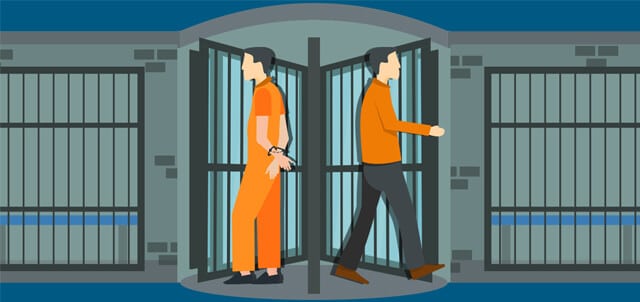
I got a new lawyer in Virginia immediately, and he tried to forestall a bench warrant being issued. We were too late, as it turned out. He tried to get the warrant rescinded, and the judge refused to pull it back. For a week or so, I stayed inside, with an arrest warrant hanging over my head. Turning myself in and hoping for a successful bond hearing was the only play left. Walking into a jail and voluntarily putting my hands behind my back is one of most unnerving things I’ve ever had to do. Anyone who’s been in the system will understand the PTSD involved in that. You just never know what’s going to happen once you’re inside, and you lose virtually all agency at that point. Submitting to it willingly was against every fiber of my being after six years inside.
I spent a couple days in jail, and it was the worst kind of déjà vu. Like revisiting a bad dream, one you thought would never invade your peaceful slumber again. A useful reminder, perhaps, but one I probably could have done without. I spent almost 24 hours sitting in a hard plastic chair in the receiving area, waiting to be classified and sent to population. My second morning there, a cell shakedown almost made me late for court while sheriff’s deputies tossed the few things in my empty cell, intimidating those who mouthed off or moved too slowly.
After two nights in jail, a bond hearing was scheduled, and I held my breath. I had low expectations when I saw that my original sentencing judge was presiding over bond hearings that day. Being turned down would have meant at least six more weeks in jail, and a major disruption to my new life. But my attorney, Patrick, was stellar. He’d done his homework, and his prediction that I’d get a bond turned out to be correct. The judge seemed skeptical though and her demeanor let me know that my next appearance in front of her wouldn’t be easy. At least I had six weeks more of freedom, and time to prepare for another revocation hearing.
I spent those six weeks in March and April trying to live and enjoy my life and the people in it, and also preparing to go back to jail. Patrick and I strategized about the upcoming hearing, and I leaned on my support network. I went to treatment and support groups, and worked the twelve-step program with my sponsor. I tried to do everything right. I saw the judge in DC again, and both he and my probation officer said that they were satisfied with my progress. I passed another polygraph, the third in a row.
All the same, the black cloud had grown heavier and darker, the kind of sky you worry will open up and soak you to the bone. I was glad to have started the anxiety meds earlier in the year, and tried to stay positive. I gave Patrick every bit of ammunition he could use and had to trust that whatever happened in Virginia, I’d be okay. But everyone my attorney consulted predicted the judge would sentence me to at least a few months in jail, and I had to take that seriously. I made preparations to be away for months, at least, turning over financial controls to my brother, and talking to my employer about a handoff of various projects. I worried about how I’d pay my mortgage, and whether I’d lose everything I’d worked so hard to build. There was some relief in the idea that this whole episode would be resolved, one way or another, but not much.
On the day of the hearing, I put on white boxers, socks, and t-shirts under my suit and tie – the only kind of clothing the jail will let you keep – and went to court. For the third time in six months, I found myself in a courtroom clutching my girlfriend’s hand and not knowing if I’d walk out or be detained. I had letters of support from my family, my job, and a rabbi. And I’d written honestly to the judge about my struggles in the last 18 months. I waited and watched as every defendant who went before me ended up with bad outcomes. Again, Patrick was on point, and he hit every mark in presenting our best case to the judge. She was openly skeptical, asking questions and giving away nothing. The prosecutor didn’t ask for my incarceration, but said the state was concerned about the allegations and pushed for a guilty finding.
When the judge asked me to stand for sentencing, I still had no idea what the outcome would be. When she said she was dismissing the violations – admonishing me that it wouldn’t go well if she saw me again – I wasn’t sure I’d heard her correctly. Just like that, this entire episode was over. I’m still adjusting to the idea a couple days later, that I can make plans, commit to upcoming events, live fully. For six months, I’ve worried deeply about disappointing everyone and becoming a statistic again, one of the majority who will end up back in jail or prison after their release. A recidivist.
And now I can get back to remaking my life, one that rests on a more solid foundation forged in the fire of these last six months, and the realization that a lot of people care about my success and are part of it. Not to mention an understanding that it can all be taken away from me again – if I let it.
 Three Hots One Cot